The AI ECU editor for motorcycles.
MotoEditor’s AI reads raw firmware and finds the maps, limits and switches itself, with no definition file to buy first. Then you tune.
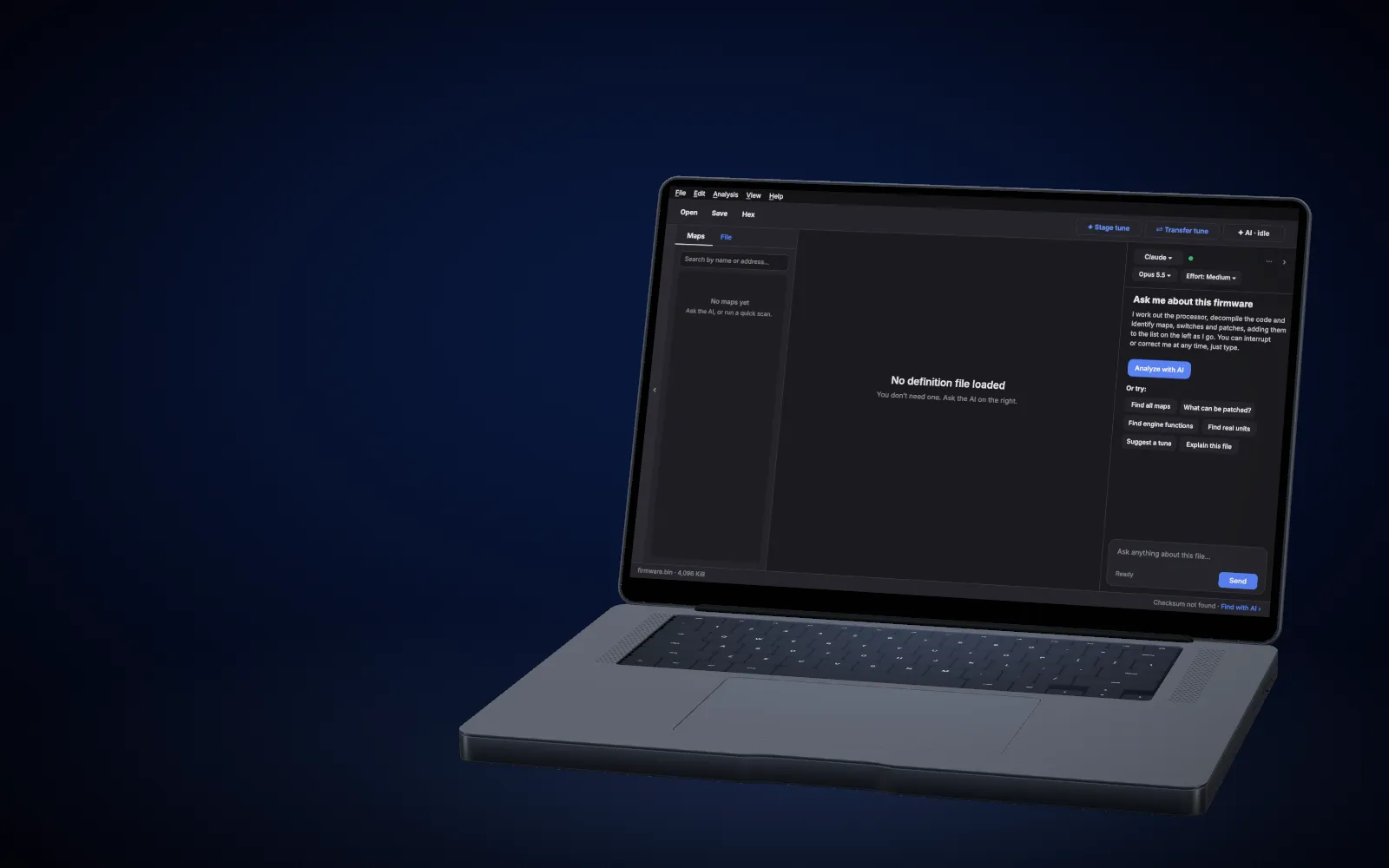
This is MotoEditor.
No definition file loaded. It doesn’t need one.
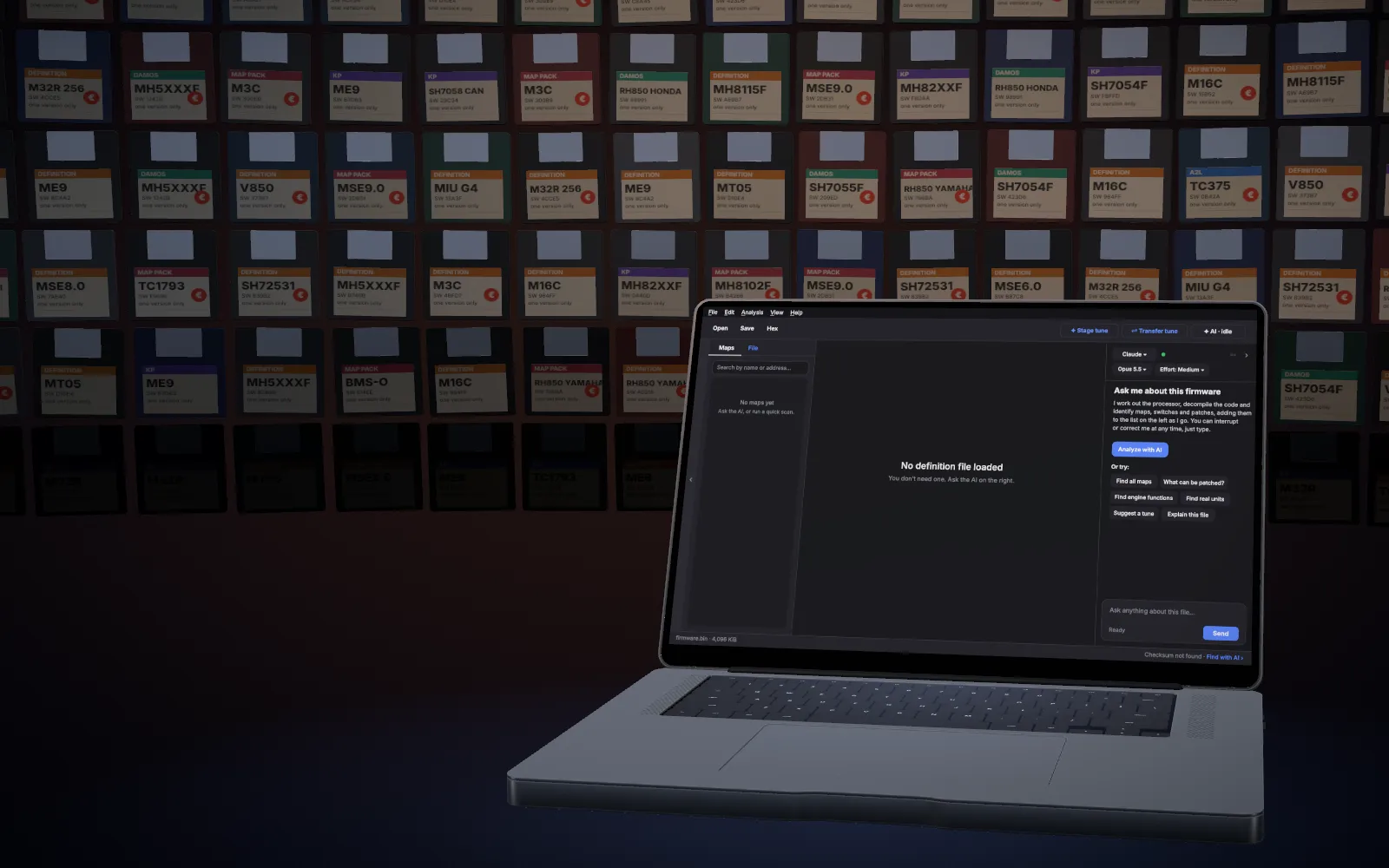
Every old tool assumes you already bought the map.
Raw firmware is megabytes of unlabelled bytes. To see a single table, you load a definition file. One per ECU. Often one per software version.
Wrong version. Wrong addresses.
When we scored real definitions for our benchmark, many belonged to another software version, with shifted addresses, or showed only part of a table.
MotoEditor needs none of them.
Drop in a raw .bin. It works out the processor and the ECU, then looks for the maps, limits and switches itself. No templates. No definition files to buy.

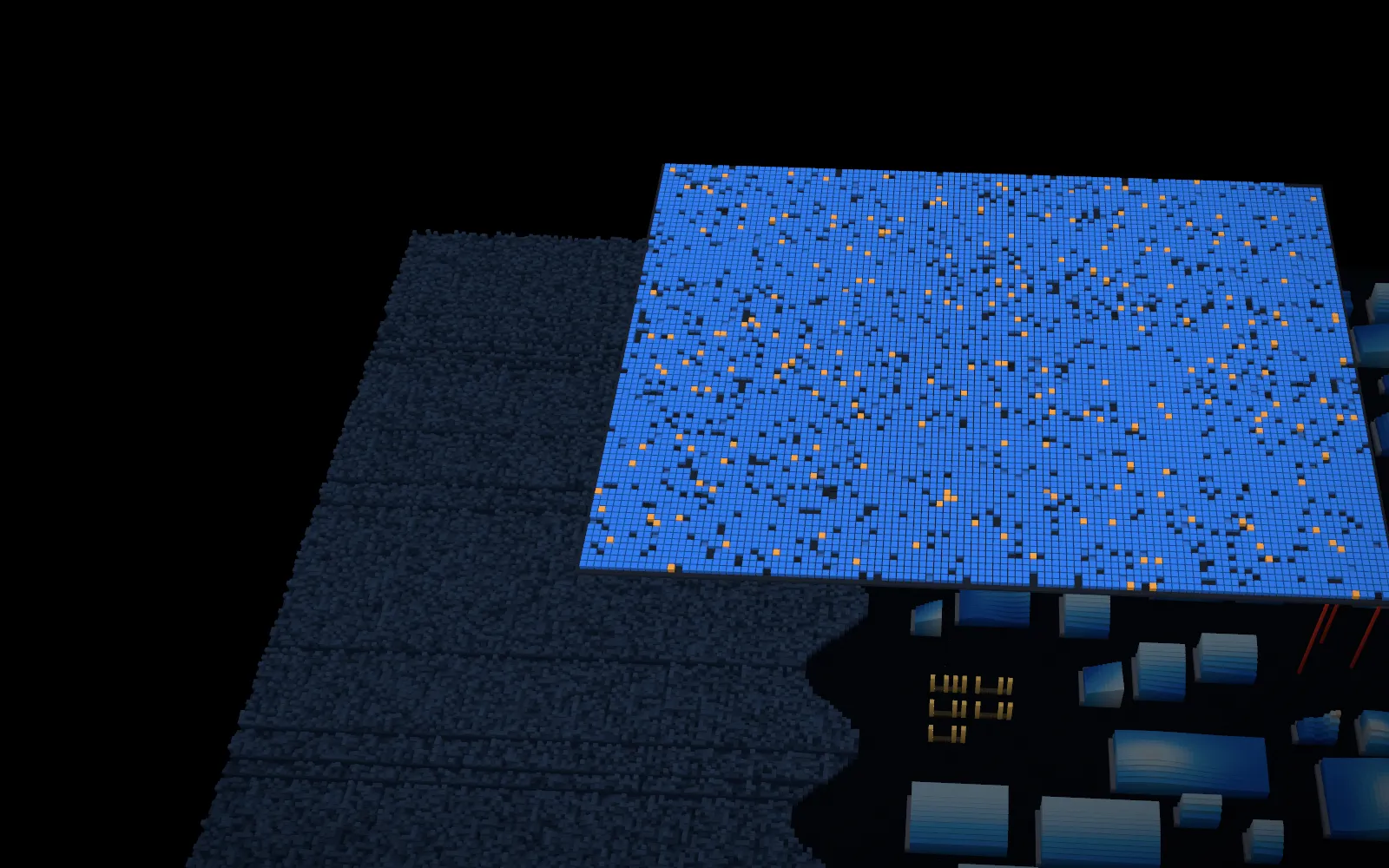
Code looks like noise. Maps look like terrain.
Every column here is one 16-bit value from a firmware image. Instructions are chaotic. Calibration is smooth. The finder reads that structure directly, family by family, with no definition file.
Illustrative image, synthetic data.
Maps.
Fuel, ignition, lambda, torque, volumetric efficiency. Address, dimensions and element size come from the bytes. Names come from the AI and stay marked as guesses until you confirm them.
Limits.
Rev and speed limit candidates, with their encoding. A candidate proves its shape, not which limit it is, so the AI checks the code before it calls anything the limiter.
Switches.
Calibration flags and codewords, located in the file and explained from the code that reads them. Patches arrive as reversible candidates. Nothing is applied until you ask.
You steer while it works.
Findings land in the list as soon as they are valid. Type to correct it mid-run and the open map updates in place.
Runs on your own Claude or ChatGPT account. Quick scan runs locally: no AI, nothing leaves your computer.
Scored against the files it replaces.
We ran the finder alone on real firmware, then compared its tables with real definitions: same offset, same dimensions, same element size. That score is for those files, not a promise about yours.
of trusted definition tables found exactly, on 157 file pairs held out of development
96.0% of all 8,794 tables, raw. 95% of 1,399 A2L maps.
- 96.0%
- of all 8,794 definition tables in that set, raw, trusting nothing
- 95%
- of 1,399 Bosch A2L maps found exactly
- 97–98.5%
- of what it reports is a real map, against A2L truth
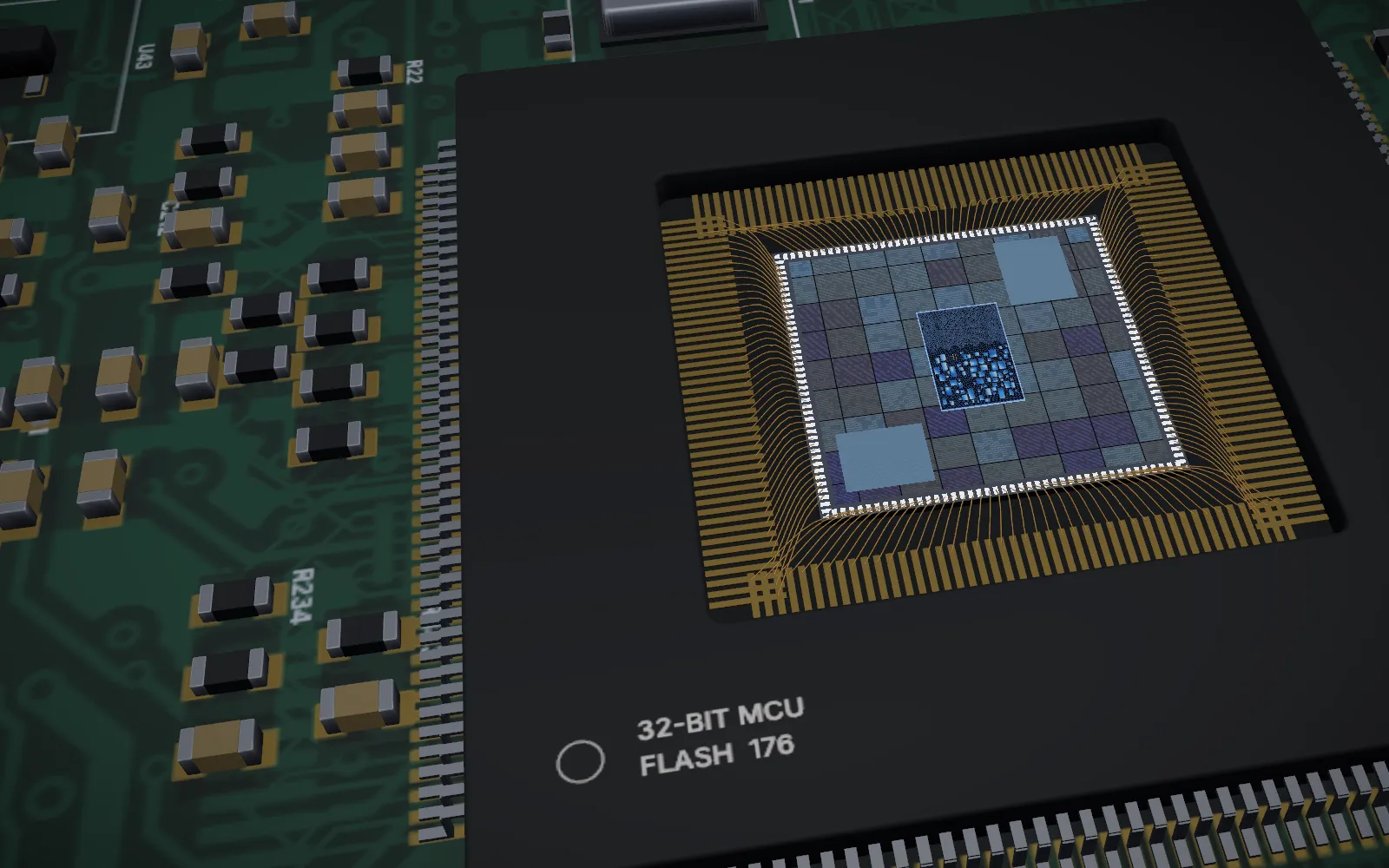
Zoom out. That terrain is a flash bank.
In most motorcycle ECUs, the file you tune lives in the microcontroller’s on-chip flash, anywhere from 256 KB to 6 MB.
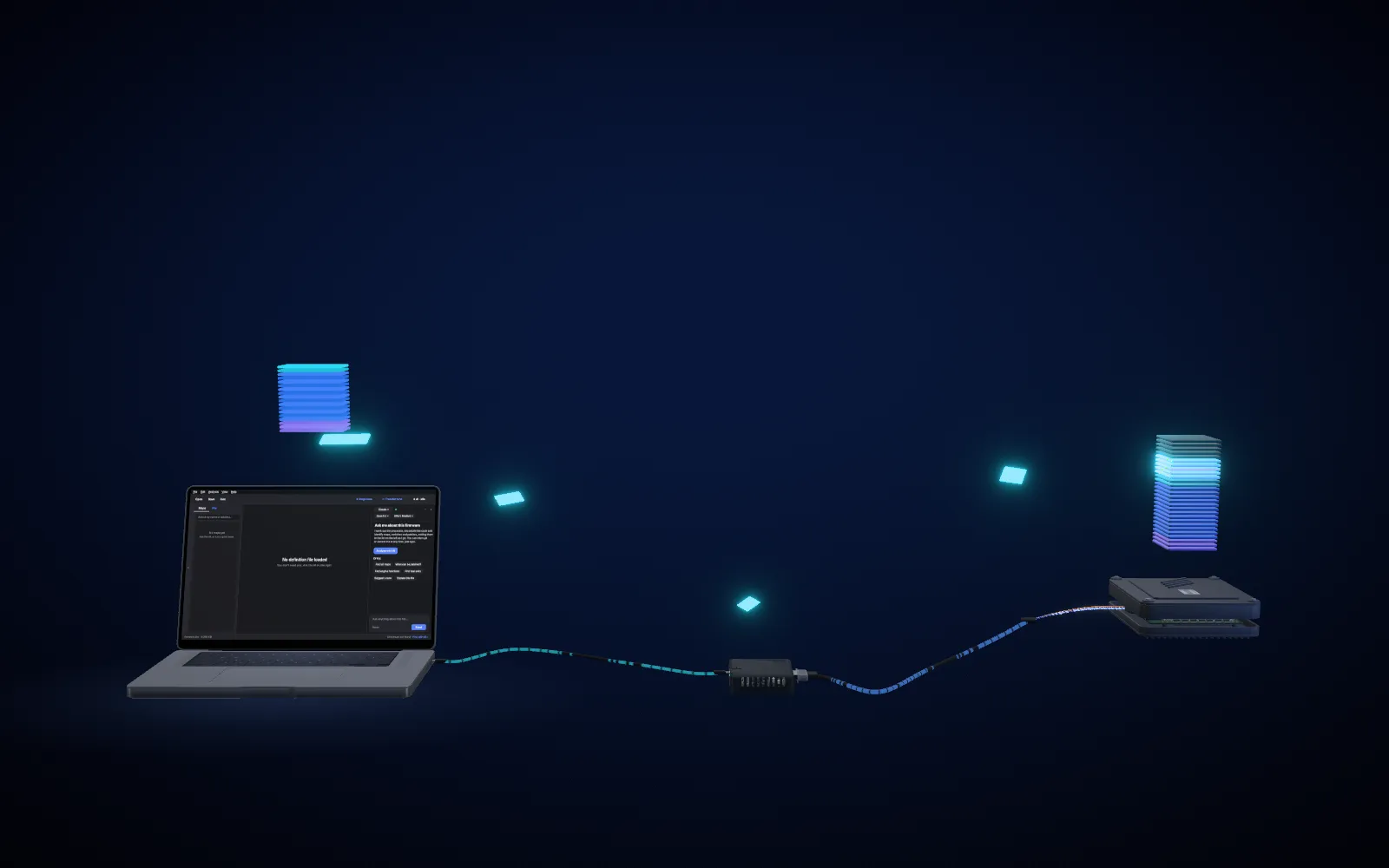
From the ECU, into MotoEditor.
A flash tool reads the file off the ECU, block by block. Open it in MotoEditor and start tuning. MotoEditor works on the file and never touches the bike.
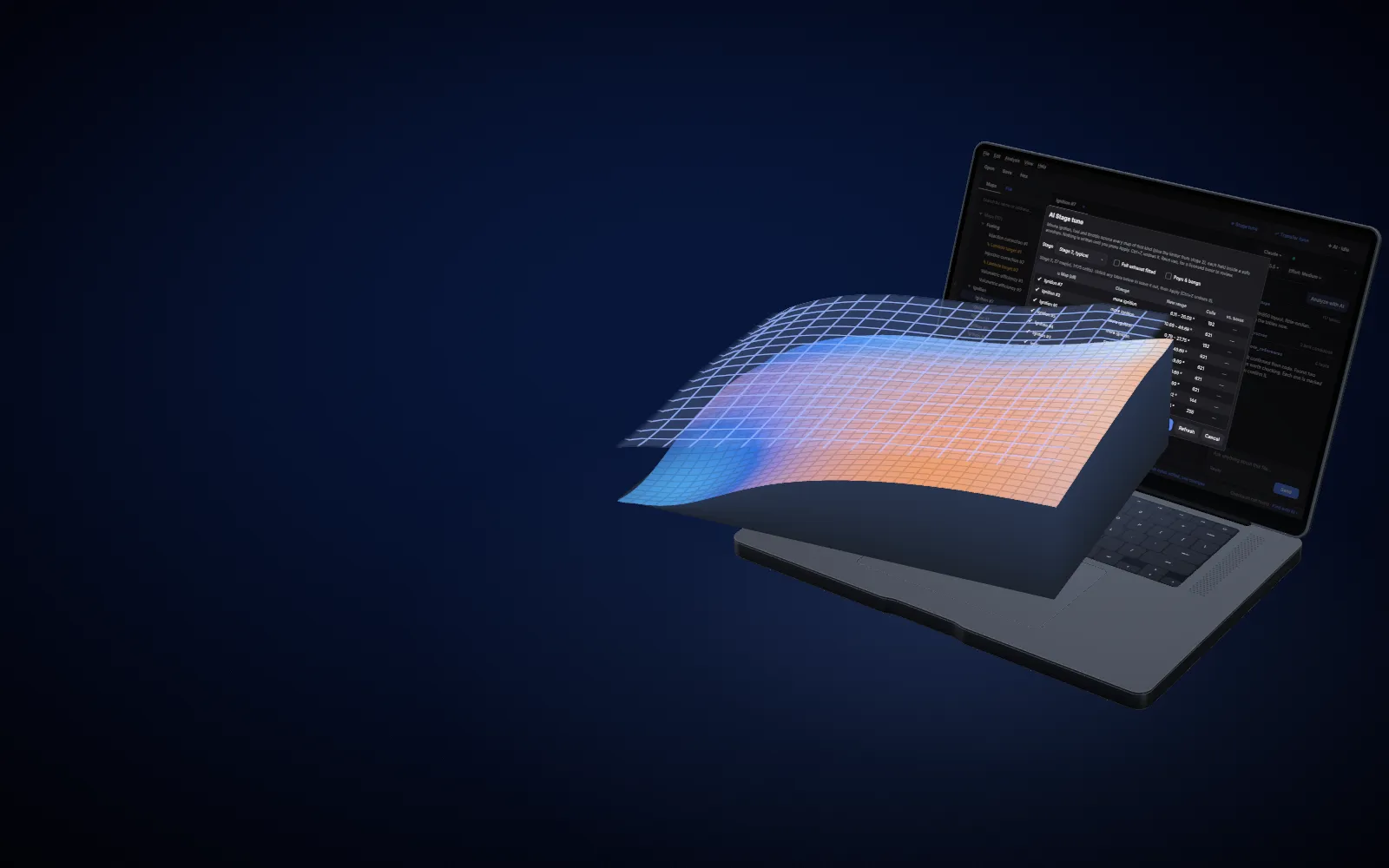
Learned from thousands of real tunes.
MotoEditor mined the shape of a real tune from 4,322 professional dyno files, then applies it cell by cell. Advance stacked through the power band, a pull-back in the knock corner, fuel where the engine wants it.
Backtested on real pro-dyno tunes: a 0.65 per-cell match on ignition and 0.29 on fuel, where 1.0 would be identical.
Pick a stage. Watch the map move.
Stage 1, 2 or 3, full exhaust, pops & bangs. One click moves ignition, fuel and throttle across every map of that kind.
- Ignition
- +1.6°
- Fuel
- +5%
- Limiter
- raised
- Overrun
- stock
Held inside set limits.
Stage tune caps each kind of map: a 55° ignition ceiling, lambda never below 0.78. Your own edits have no cap, and no limit makes a tune safe. Drag this surface to see a cap at work.
Nothing is written until you press Apply. Ctrl+Z undoes it. Race use, for an experienced tuner to review.
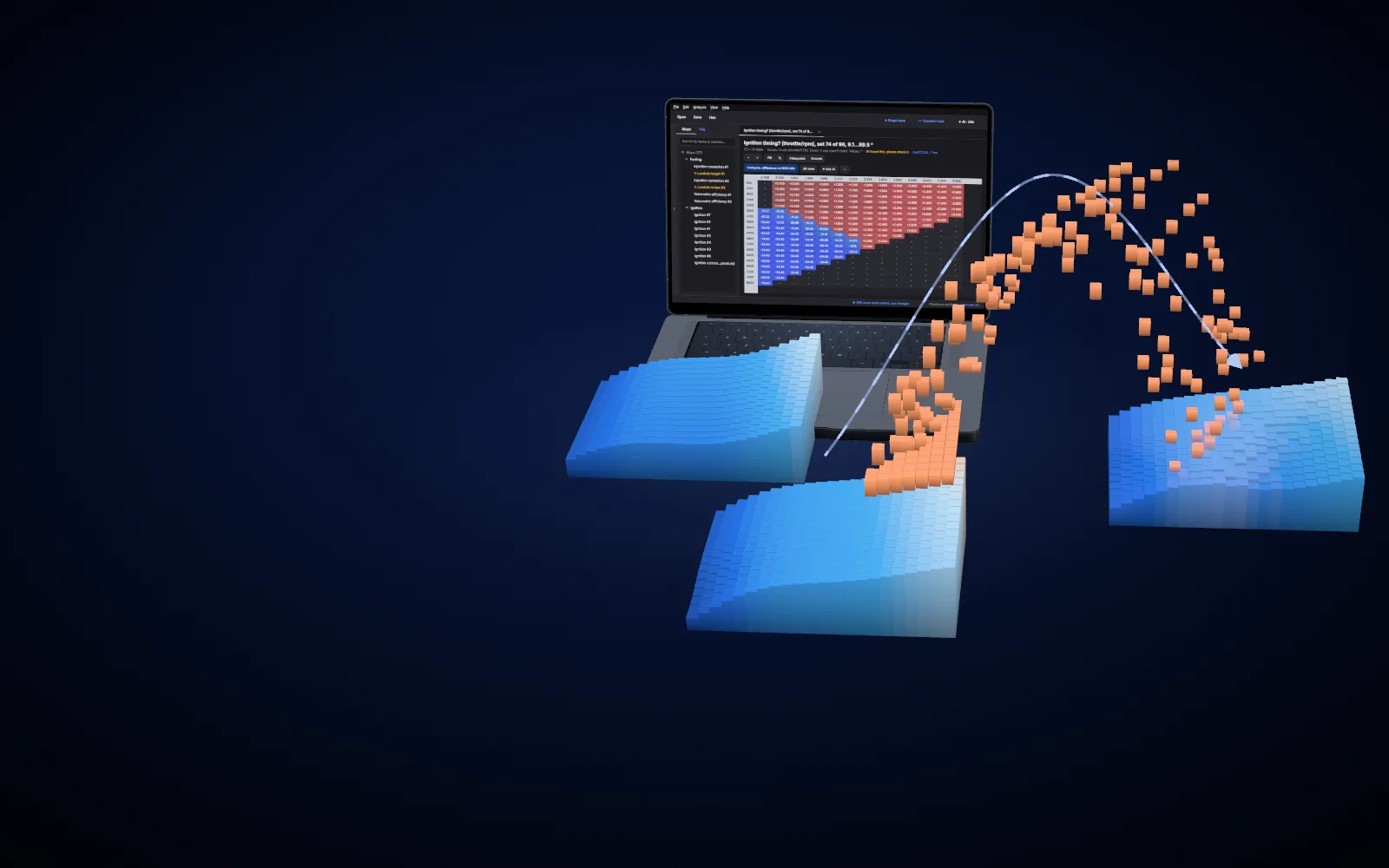
Move a proven tune onto another file.
Take a stock and tuned pair of one software version and lay the tune onto your file, cell by cell, with a live before and after.
- Same stock
- Matched tables are copied.
- Different stock
- The change is added cell by cell.
- Axes
- Copied where the stock axis matches.
- Everything else
- Bytes outside matched tables are listed, never written.
Undoable, like every edit.
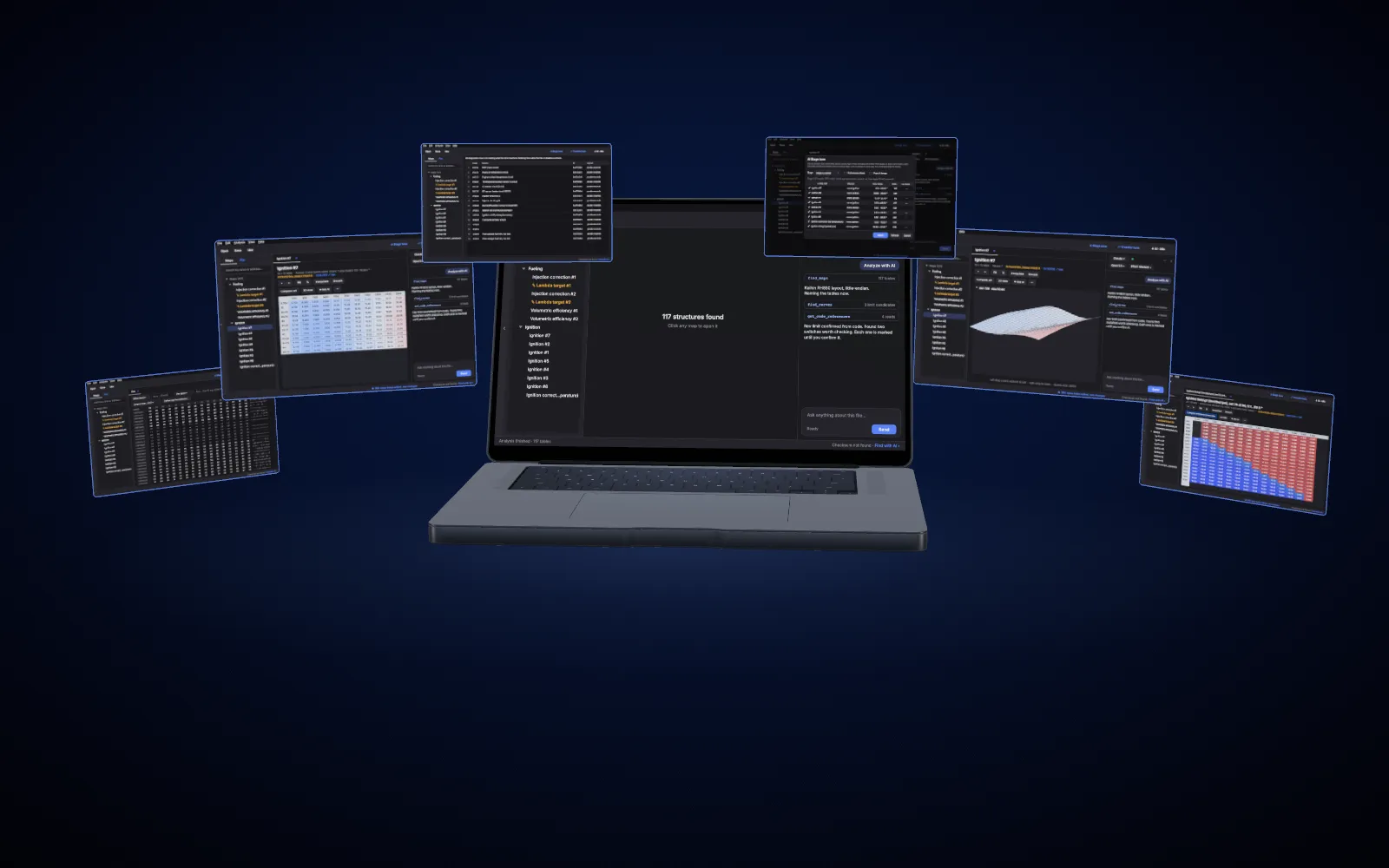
It replaces the whole toolbox.
This is the software, exploded. Every editing tool you used to keep in a separate program, and everything you used to buy per file.
Definition filesAI map finderMaps, limits and switches, from the bytes.Hex editorHex workbenchFind, go to, define a map from a selection.Compare toolCompare any fileWhich cells moved, and by how much.Table editor2D + live 3D editorDrag a cell and the surface updates.Manual disassemblyGhidra code referencesLocated and installed for you.DTC sheetsDiagnostic rowsCodes with meanings, read-only.
Already own definitions? Import them as a starting point, or export what you find. Support covers tables, constants and flags, and a loss report lists anything else.

Buy once. Own it forever.
No subscription to MotoEditor, and no fees per file.
The complete tuning studio
Lifetime license for one computermacOS · Windows
Buy MotoEditor- Extra computer
- €499
- Updates after year one
- €299/yr, optional
Everything included
- AI map detection
- Stage tune 1/2/3
- Transfer tune and compare
- 2D and live 3D map editor
- DTCs and hex workbench
- A year of updates
You’ll also need
The AI runs on your own account, with Node.js and the provider’s command-line tool.
MotoEditor works on files. Reading and writing the ECU takes a flash tool, sold separately.